

Iran is launching serious allegations against Israel, charging it with provocation and claiming that Mossad is organizing attacks on neighboring countries to frame Tehran. Through a dark network of agents and "secret depots" of drones allegedly hidden in the heart of Iranian territory, Israel stands accused of setting the stage for the next Great War.
False flag operations
The concept of a "false flag" operation has existed in defense studies and international relations for hundreds of years. These are instances where an actor—usually a state, an intelligence agency, or the military—carries out a provocative attack, often on its own soil, but under a false flag so it can be attributed to the enemy. The goal is to mobilize public opinion against the opponent, secure a justification for declaring war, or pressure hesitant or neutral allies to intervene.
The legend that "Nero played the lyre while Rome burned" suggests the Roman Emperor was indifferent during the Great Fire of 64 AD. However, many historians believe he started the fire and deliberately let it destroy the city to blame the emerging Christian community, while simultaneously clearing space for grand building projects like the Domus Aurea.
In modern times, Operation Northwoods (1962) is widely considered the most famous proven "false flag" operation in US history. The CIA planned mass terrorist attacks within the US to be blamed on Cuba, creating a pretext for war against the communist regime. Similarly, in 1954, Israel designed Operation Susannah, a series of bombings in Egypt targeting cinemas, libraries, and American and British cultural centers in Cairo and Alexandria. The plan was to attribute the attacks to the Muslim Brotherhood, portraying Egypt as unstable and prone to radicalism to prevent Britain from withdrawing troops from the Suez Canal zone and to damage US-Egyptian relations for Israeli strategic interests.
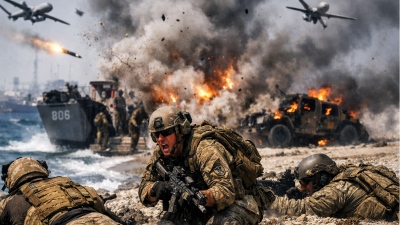
Today, amidst the war with Iran, Tehran has repeatedly accused Tel Aviv of "false flag" operations that are subsequently blamed on Iran. According to Iran, through these actions, Israel seeks to isolate it, turn the Gulf states against it, and pressure hesitant Western nations, such as the UK and France, to join the war alongside Israel and the US. It is worth noting that Iran itself has intentionally targeted Gulf countries, wanting to show that if the war persists, the entire region will suffer, not just Tehran. However, despite the wave of attacks, it has categorically denied involvement in certain cases where evidence suggests it was not responsible.
Iran accuses Israel of "false flag" operations
Last week, Iran's Supreme Leader, Mojtaba Khamenei, warned of potential "false flag" operations by Israel and "Zionist ploys," calling for regional unity. Iran characterized several attacks in recent weeks as such operations, and these allegations have become a central element of public discourse. During the first week of the war, it accused Israel of launching drone attacks on Saudi energy facilities, such as Aramco, to disrupt relations between the two countries and isolate Iran.
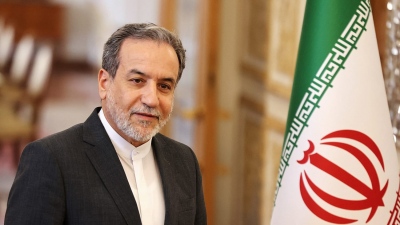
An Iranian official stated that certain attacks "were not carried out by us." These accusations followed a series of strikes on targets in Saudi Arabia and Oman. Iran further claimed that some attacks may have been executed by Mossad agents within Iranian territory through networks that have penetrated deep into the country.
On March 4, an alleged Iranian ballistic missile entered Turkish airspace and was shot down by NATO. The incident raised questions, as Turkey maintains relations with Tehran. Iran denied any involvement and proposed a joint investigation. On March 9, an explosion in Bahrain was initially attributed to an Iranian drone by CENTCOM. However, independent analyses showed it was likely caused by a Patriot missile.
Similarly, Iran denied an attack on an airport in Baku, pointing to Israel as the likely culprit and claiming the goal was to undermine its relations with its neighbors. Particular attention was drawn to claims of an Iranian attack on the Diego Garcia military base, roughly 4,000 km away. Given that Iranian missiles have a shorter range, such an attack would have massive geopolitical consequences.
Iran categorically denied responsibility, calling the claims an "Israeli false flag operation." Even NATO stated it could not confirm the evidence. At this stage, it is impossible to fully confirm or reject these claims. While the US and Israel have a history of covert operations, the same applies to Iran regarding its habit of dismissing responsibility as an "inside job."
www.bankingnews.gr





Σχόλια αναγνωστών